Want the verdict first? See what the evidence actually supports →
Pfizer didn't discover this. — Hirokazu Kawagishi did. Lion's Mane and Memory: What the Real Science Says
But the science behind lion's mane and nerve growth factor is real.
A real mushroom. A real, decades-old research thread.
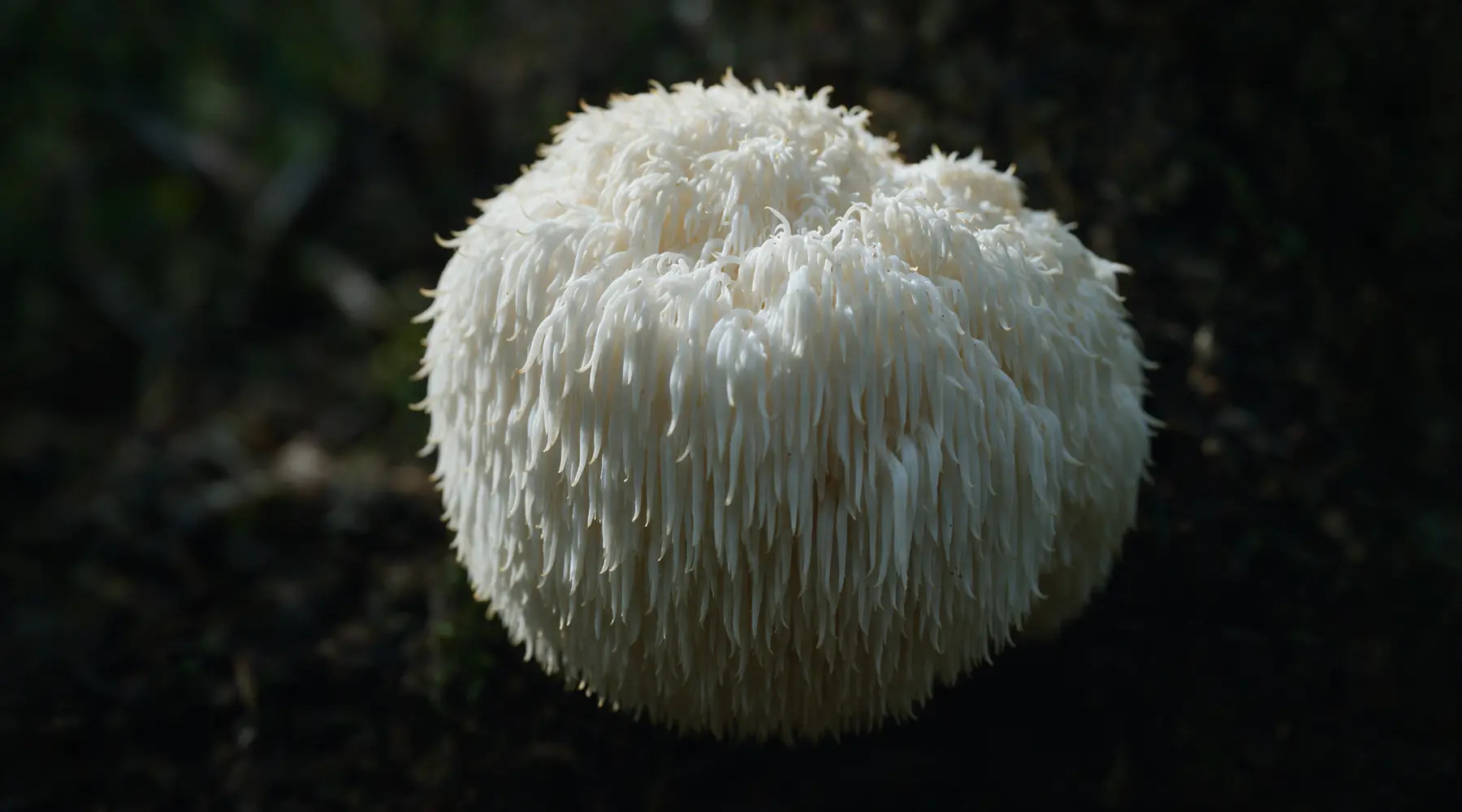
Lion's mane (Hericium erinaceus) contains compounds called hericenones and erinacines. Real, published research — identified by Japanese researcher Hirokazu Kawagishi in 1991 and 1996, not Pfizer — found these compounds stimulate nerve growth factor (NGF), a protein involved in maintaining and growing brain cells.
That mechanism is real and independently verifiable. What happens next — how a vendor's page describes it — is where this gets more complicated.
Not every claim on the vendor's page holds up the same way.
Scroll past each one. What's underneath is what we could actually verify — or couldn't — against real published research.
"Compounds in lion's mane stimulate nerve growth factor production."
Real, published, independently verifiable — Kawagishi's 1991/1996 research on hericenones and erinacines.
"Supports memory, cognitive function, and mental clarity."
A real 16-week randomized, double-blind, placebo-controlled trial found cognitive improvement in adults with mild cognitive impairment. The benefit declined after supplementation stopped — see Chapter 4.
"A 100% natural substance unlike anything else known to man."
An unfalsifiable superlative, not a claim any published study could confirm or deny.
What the actual study found.
A real randomized, double-blind, placebo-controlled trial — adults 50–80 with mild cognitive impairment, 16 weeks — found a genuine, statistically significant improvement in cognitive performance on lion's mane extract, compared to placebo.
The honest caveat: that improvement declined after participants stopped taking it. This isn't a one-time fix — it's a habit that has to be maintained. Alzheimer's-specific evidence is explicitly described as preliminary in the same review, calling for larger, longer studies before firmer conclusions.
Source: a 2026 narrative review (PMC12030463) covering both findings.
Myco-Max Memory, ingredient by ingredient.
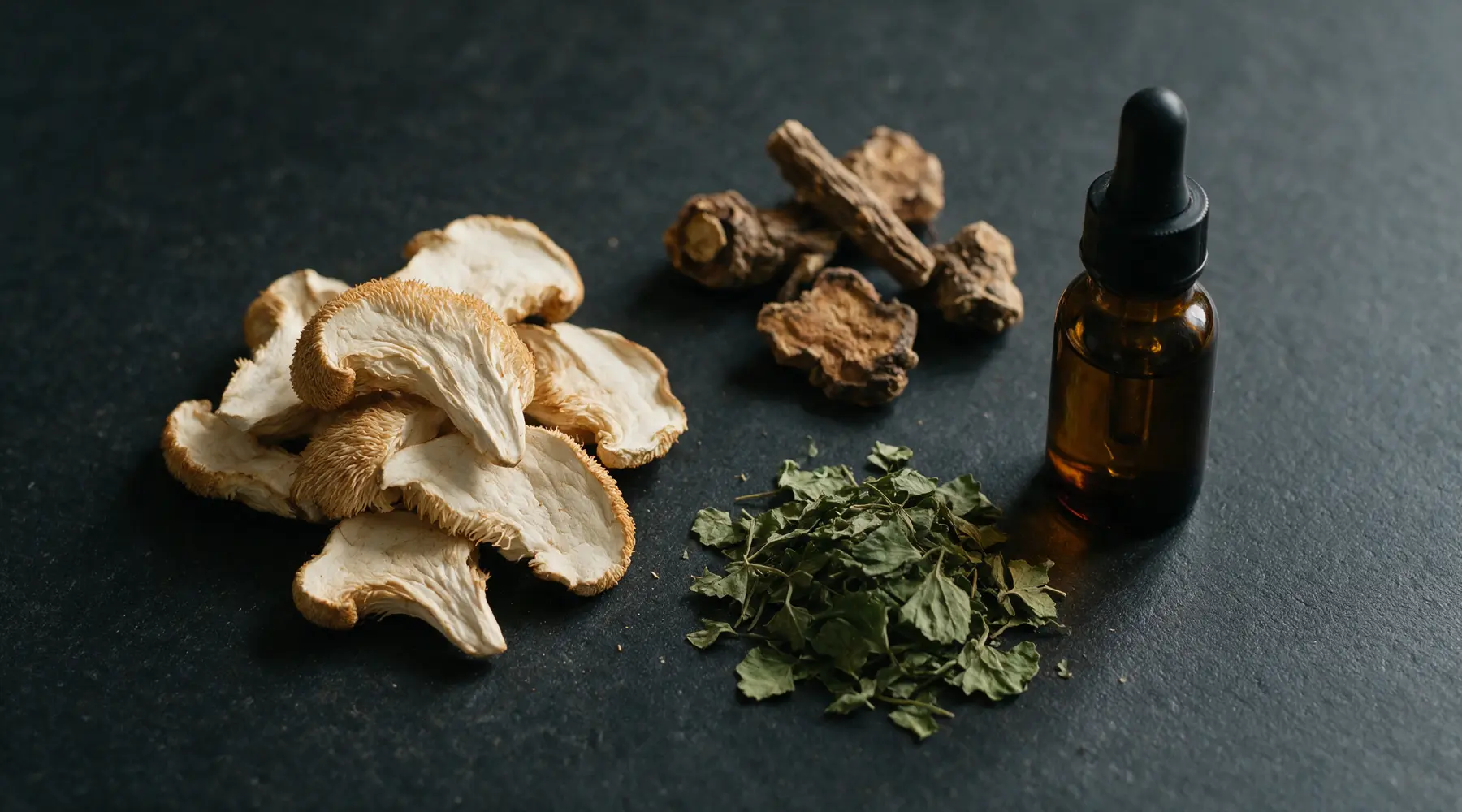
A liquid tincture, one drop daily. Sold by Primal Force, fronted by Dr. Al Sears, MD, CNS.
The ingredient we investigated: lion's mane mushroom — the evidence above is specific to this ingredient.
The rest of the formula: cordyceps, rhodiola rosea, tribulus terrestris, salvia officinalis, gotu kola. We didn't independently research each of these — the reviewed evidence covers lion's mane specifically, not the full blend.
The vendor's own page makes two numbers do a lot of work. Here's what we could actually verify.
"Results happening very fast... within just one hour of a single dose."
The real human study ran 16 weeks. No published research found supports a one-hour timeline.
None of this means lion's mane doesn't work. It means the real, modest evidence didn't need this much embellishment — and a vendor willing to overstate the numbers is worth reading carefully everywhere else on the page too.
What the real research actually supports, stage by stage.
The real science doesn't need the hype.
What we know
- Lion's mane compounds stimulate NGF — real, published, independently verifiable
- Discovered by Hirokazu Kawagishi, not Pfizer
- A real 16-week human trial found genuine cognitive improvement in MCI
What looks promising
- Consistent, ongoing use as a modest cognitive-support habit
- A real 90-day money-back guarantee with plain terms
What hasn't been demonstrated
- The "1,452%" and "within one hour" figures
- Alzheimer's-specific benefit — evidence is explicitly preliminary
- Benefit lasting after you stop taking it
Healthy Health Secrets is reader-supported. This page carries no affiliate links; the review it leads to does, and we say so plainly there. Nothing here is medical advice. See how we check claims like this →
Wondering how fast lion's mane is supposed to work? The real timeline, from the actual trials →
Taking a prescription medication? Does lion's mane interact with it? →
Curious about the rest of the formula? Does gotu kola actually support memory? →